
Hyperopia (Farsightedness): Causes, Symptoms, and Treatment
Do you find it easy to see distant objects but struggle when reading a book or looking at your phone? This could be a sign of hyperopia, commonly known as farsightedness. In this hyperopia eye condition, light entering the eye focuses behind the retina instead of directly on it, leading to blurred near vision. This vision condition can affect individuals across different age groups. Some people experience mild symptoms, while others struggle with reading, screen use, or prolonged close work. Because this eye-focusing problem can gradually worsen or affect daily activities, early diagnosis through a professional eye examination is important for maintaining healthy vision.
What Is Hyperopia (Farsightedness)?
Hyperopia or farsightedness, is a vision condition where the eye has difficulty focusing on nearby objects. In normal vision, light passes through the cornea and lens of the eye and focuses directly on the retina, creating a clear image. In hyperopia, the eye’s structure causes light to focus behind the retina, which leads to blurred vision when looking at close objects, while distant objects may appear clearer. Mild hyperopia may not cause noticeable problems at first, but it can still lead to eye strain during reading or close work.
How the Eye Focuses Light (Understanding Normal Vision)
To understand hyperopia, it helps to know how the eye focusing system normally works. When light enters the eye, it first passes through the cornea, the transparent outer layer that bends incoming light. The light then travels through the lens of the eye, which further adjusts the focus to form a clear image. Finally, the focused light reaches the retina, a light-sensitive layer at the back of the eye. The retina converts this light into signals that travel to the brain, allowing us to see. In normal vision, light focusing in the eye occurs precisely on the retina. In hyperopia, however, the eye’s focusing power is not strong enough, causing the image to form behind the retina and resulting in blurred near vision.
Causes of Hyperopia
Several structural factors can contribute to hyperopia causes.
Short Eyeball
One of the most common causes of farsightedness is a short eyeball. When the eyeball is shorter than normal, light rays cannot reach the retina correctly and instead focus behind it.
Flat Cornea
A flat cornea bends light less effectively than a normal curved cornea. This reduces the eye’s focusing power and contributes to farsightedness.
Weak Focusing Power of Lens
The lens of the eye also plays an important role in adjusting focus. If the lens does not bend light adequately, it can contribute to hyperopia.
Genetic Factors
Hyperopia can also be a genetic eye condition. Individuals with a family history of refractive errors may be more likely to develop farsightedness.
Age-Related Factors
As people age, the natural focusing ability of the eye may gradually decrease. This can increase the likelihood of developing vision issues related to hyperopia.
Symptoms of Hyperopia
The hyperopia symptoms may vary depending on the severity of the condition.
Blurred Near Vision
The most common symptom is blurry near vision, especially when reading books, using phones or working on computers.
Eye Strain
Many individuals experience eye strain after prolonged close work because the eyes must work harder to focus.
Headaches
Persistent focusing effort can lead to headaches from eye strain, often felt around the forehead.
Squinting
People with hyperopia may squint to temporarily improve focus.
Difficulty Concentrating in Children
Children with undiagnosed farsightedness may struggle with reading or schoolwork due to vision problems in children.
Burning or Watery Eyes
Some individuals experience eye discomfort, including burning or watering, after long periods of near work.
Hyperopia in Children vs Adults
Hyperopia in Children
Hyperopia in children can sometimes go unnoticed because children may not realize their vision is abnormal. However, signs may include frequent eye rubbing, reading difficulties, or trouble concentrating in school. Regular pediatric eye examinations are important to detect vision issues early.
Farsightedness in Adults
Farsightedness in adults typically causes difficulty with reading, computer use, or other close tasks. Adults may also experience headaches and eye fatigue after prolonged screen time.
How Hyperopia Is Diagnosed
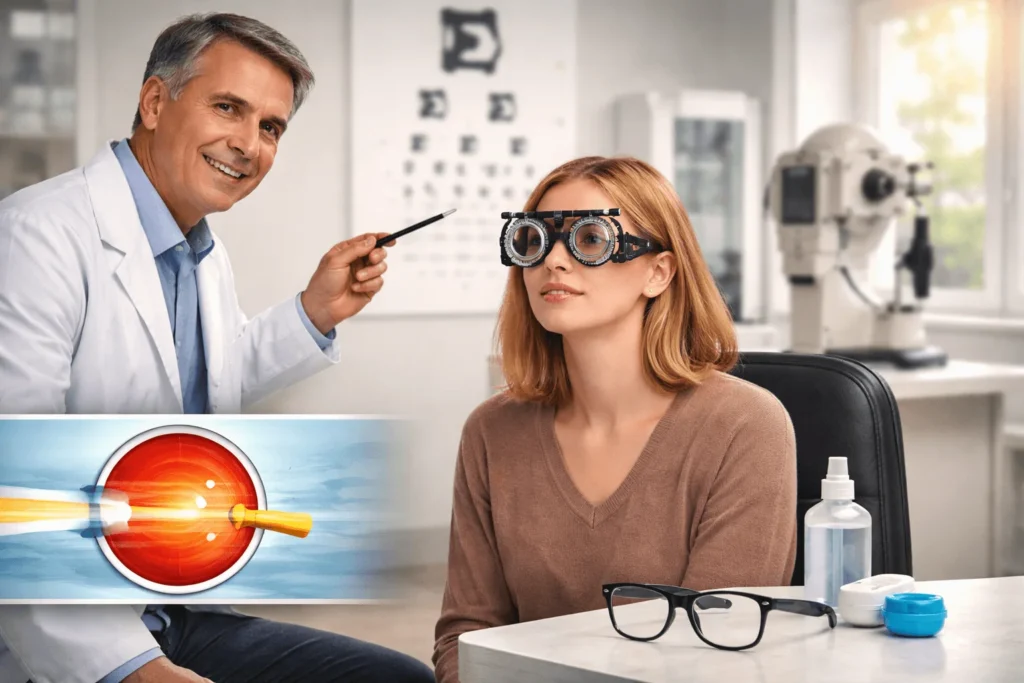
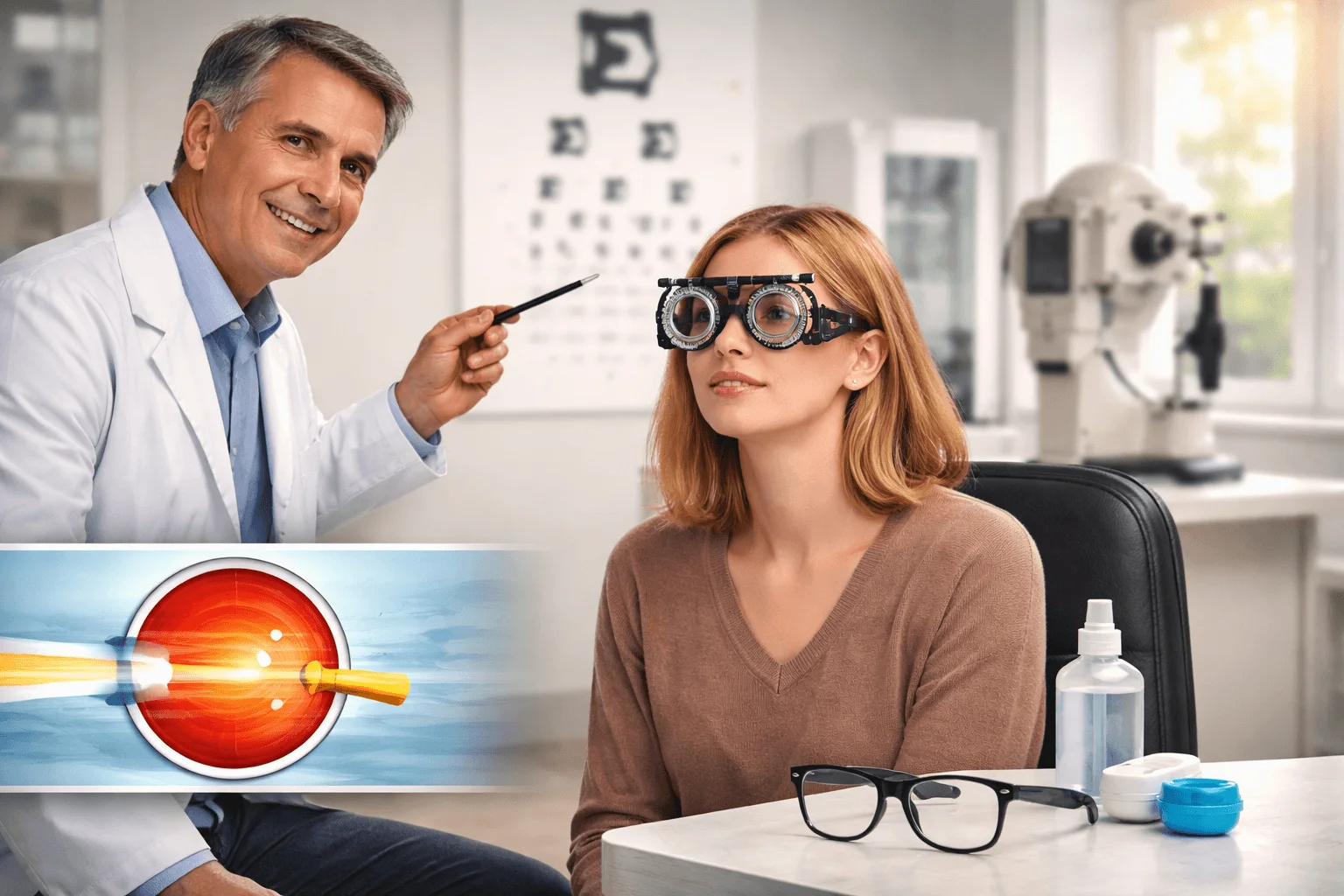
Accurate hyperopia diagnosis requires a comprehensive eye doctor examination.
Visual Acuity Test
This vision test measures how clearly a person can see letters or symbols at different distances.
Refraction Test
A refraction test determines the exact lens prescription needed to correct the refractive error.
Retinoscopy
This test helps detect refractive errors by observing how light reflects from the retina.
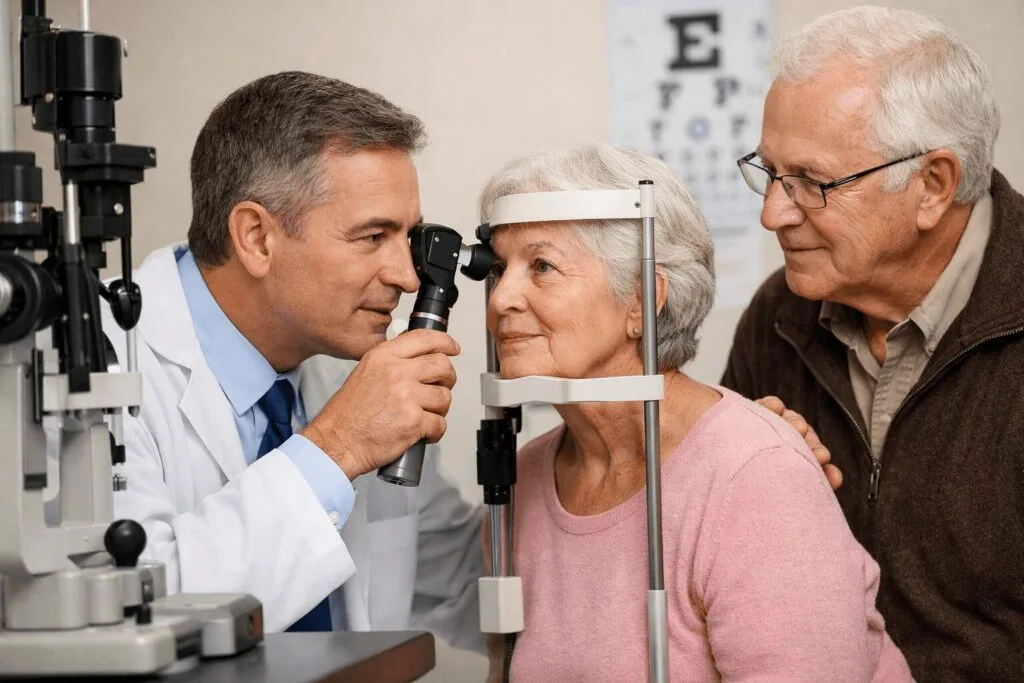
Dilated Eye Examination
A dilated eye examination allows doctors to examine the retina and overall eye health.
Treatment Options for Hyperopia
The most appropriate hyperopia correction depends on age, severity, and lifestyle.
Prescription Glasses
Hyperopia glasses use convex lenses to bend light correctly so that images focus directly on the retina. Glasses remain the most common solution for correcting farsightedness.
Contact Lenses
Contact lenses for hyperopia offer an alternative to glasses and may provide a wider field of vision. Several vision correction lenses are available depending on individual needs.
Laser Eye Surgery
Procedures such as Trans PRK, and other refractive surgeries reshape the cornea to improve focusing ability. Laser eye surgery for hyperopia may be recommended for suitable candidates.
Possible Complications if Hyperopia Is Not Treated
Untreated hyperopia may lead to several problems, including:
- Chronic eye strain complications
- Frequent headaches
- Difficulty with reading and close tasks
- Learning challenges in children
- Increased risk of lazy eye in severe childhood cases
Early treatment helps prevent these issues.
Tips to Reduce Eye Strain with Hyperopia
Adopting healthy habits can reduce eye discomfort.
- Ensure proper lighting while reading.
- Maintain proper reading distance
- Schedule regular eye examinations.
- Follow healthy vision habits
- Follow the 20-20-20 rule by taking frequent breaks while using digital screens.
These simple eye care tips support long-term eye health.
When Should You See an Eye Doctor?
An eye doctor consultation is recommended if you notice:
- Frequent headaches
- Persistent blurry near vision
- Difficulty reading
- Constant eye fatigue
- Children struggling in school
Early eye examination helps detect and manage vision problems effectively.
Hyperopia Treatment at Aarya Eye Care
Comprehensive hyperopia treatment begins with accurate diagnosis and individualized care. At a trusted eye clinic in Thrissur, specialists perform detailed eye examinations using modern diagnostic equipment to identify refractive errors and other vision concerns. Patients receive personalized vision correction treatment, which may include glasses, contact lenses, or advanced refractive procedures. Aarya Eye Care is widely regarded as the best eye care hospital in Thrissur for advanced vision care and refractive error management.
Frequently Asked Questions
Is hyperopia common in children?
Yes, mild hyperopia is common in children, but significant cases may require treatment.
Can hyperopia cause headaches?
Yes. Prolonged focusing effort often leads to headaches and eye strain.
What is the best treatment for hyperopia?
The most common farsightedness treatments include prescription glasses, contact lenses or laser vision correction.
Is laser surgery safe for farsightedness?
For suitable candidates, modern refractive surgeries such as LASIK can safely correct hyperopia.
How often should I get an eye check-up?
Adults should have routine eye exams every 1-2 years, while children may require regular pediatric evaluations.