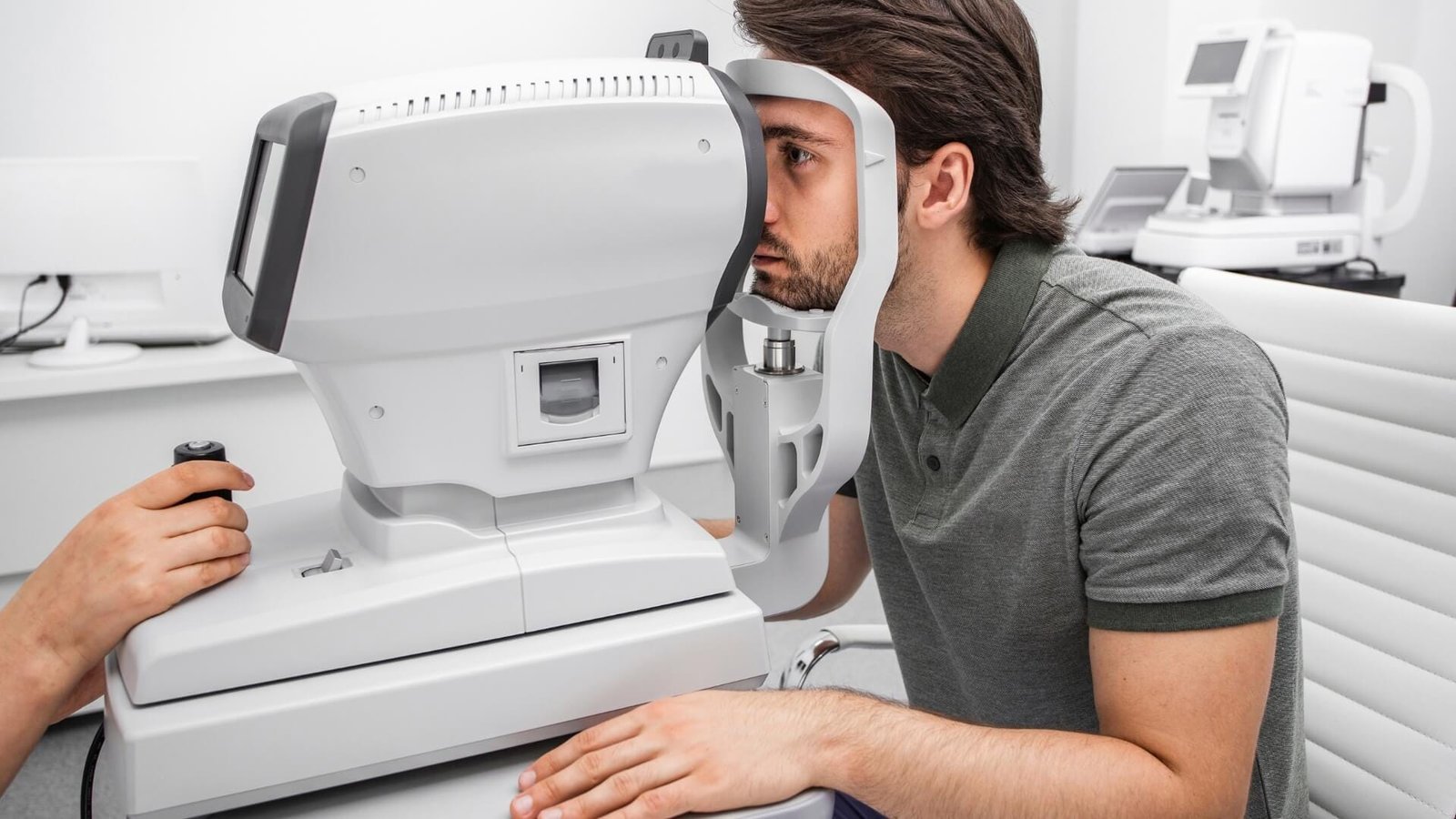

Astigmatism Causes and Treatment: What You Need to Know
Clear vision depends on how accurately your eyes focus light. Even a slight shift in that focus can lead to inconsistent or mildly blurred vision.
Astigmatism is one such condition. It occurs when the cornea or lens has an irregular curvature, preventing light from focusing at a single point on the retina. Instead, light scatters, causing vision to appear blurred, stretched or uneven across distances. Unlike temporary vision issues, astigmatism is a structural variation within the eye.
It is a common and highly manageable condition. However, astigmatism causes and treatment can vary depending on individual eye anatomy and severity. A clear understanding of the causes of astigmatism in eyes is essential for accurate diagnosis and long-term clear vision.
What is Astigmatism ?
Astigmatism is a refractive condition where the cornea or lens has an uneven curvature. Ideally, the eye has a smooth, spherical shape. In astigmatism, it becomes slightly elongated, leading to uneven light focus. This irregularity prevents light from focusing at a single point on the retina, resulting in blurred or stretched vision. It can occur alone or alongside other vision issues like nearsightedness or farsightedness, making astigmatism diagnosis and treatment essential for accurate correction.
What Causes Astigmatism?
Astigmatism develops when the cornea or lens loses its uniform curvature. Instead of a smooth spherical surface, it becomes uneven, causing multiple focal points inside the eye.
Irregular Corneal Shape
The most common among the causes of astigmatism in eyes is an uneven corneal surface. A healthy cornea is typically round, but in astigmatism, it takes on an oval shape. This causes light rays to focus at different points, leading to blurred or distorted vision.
In many cases, this condition is present from birth.
Lens-Related Astigmatism (Lenticular)
Sometimes, the issue lies within the internal lens rather than the cornea. Although less common, this type produces a similar focusing problem and contributes to visual distortion.
Genetic Factors
Astigmatism eye problems often run in families. If one or both parents have it, the likelihood of developing it increases significantly, often during childhood.
Eye Injury or Trauma
Any injury that scars or alters the cornea can change its curvature. Even after healing, the irregularity may persist, leading to gradual onset astigmatism.
Eye Surgery
Certain surgical procedures can unintentionally alter the corneal shape. While rare, this may result in induced astigmatism.
Eye Conditions (Keratoconus Focus)
Conditions like Keratoconus cause the cornea to thin and bulge outward into a cone-like shape. This leads to progressive and often severe astigmatism, requiring early diagnosis and intervention.
Age-Related Changes
As the eye ages, structural changes can alter curvature, sometimes worsening existing astigmatism.
Risk Factors
Key contributors include:
- Family history
- Existing eye diseases
- Previous eye surgeries
- Natural aging
These factors collectively explain many irregular cornea causes and highlight why regular eye check-ups are essential.
Astigmatism Treatment
Astigmatism treatment focuses on correcting how light enters the eye so it aligns properly on the retina. The right approach depends on the severity of the condition, your daily habits and overall eye health.
Eyeglasses (First-Line Treatment)
Eyeglasses with cylindrical lenses are the most common and accessible solution. They compensate for uneven curvature and are highly effective for mild to moderate cases. For many, this is the simplest answer to how to treat astigmatism.
Contact Lenses
Toric contact lenses are specially designed to correct astigmatism by addressing uneven curvature. They offer sharper and more precise vision correction in some cases. However, proper fitting and strict hygiene are critical to avoid complications.
Laser Eye Surgery (Advanced Correction)
- LASIK
A widely used procedure that reshapes the cornea using a laser. It offers quick recovery and long-term results. - PRK
In this procedure, the outer layer of the cornea is gently removed before reshaping the underlying surface. Recovery takes longer than LASIK, but it is suitable for individuals with thinner corneas.
Not everyone qualifies for these procedures. A detailed evaluation is essential before considering surgical types of astigmatism treatment.
Orthokeratology (Ortho-K)
This involves wearing specially designed lenses overnight to temporarily reshape the cornea. Vision remains clear during the day without glasses or contacts. The effect is reversible and requires consistent use.
Combined Vision Correction
Astigmatism often coexists with myopia or hyperopia. Modern treatment approaches correct multiple refractive errors simultaneously for optimal visual clarity.
Choosing the Right Treatment
Selecting the right approach depends on:
- Severity of astigmatism
- Age and lifestyle habits
- Screen exposure and occupational needs
- Overall eye health
A personalized consultation at Aarya Eye Care, widely regarded as one of the best eye care hospital in Thrissur, ensures that the treatment plan aligns with individual needs. Expert ophthalmologists assess your condition thoroughly before recommending the most effective solution.
Key Facts Most People Get Wrong
There are several misconceptions surrounding astigmatism that can delay proper care:
- It is not caused by excessive screen use
- It does not resolve on its own
- It is a manageable condition with the right correction
Understanding these facts helps patients make informed decisions and seek timely treatment.
Conclusion
Astigmatism is primarily caused by an irregular curvature of the cornea or lens, leading to improper light focus and blurred vision. While the condition may result from genetics, injury or underlying eye disorders, it can be effectively managed through eyeglasses, contact lenses or advanced surgical procedures.
A clear understanding of astigmatism causes and treatment plays a critical role in early diagnosis and selecting the most effective correction method. The right approach not only improves vision but also enhances overall quality of life. At Aarya Eye Care, the focus goes beyond standard correction. With detailed corneal mapping, advanced diagnostic evaluation and customized treatment planning, each patient receives care personalized to their specific eye structure. This expert-guided approach makes it a reliable choice for those seeking the best eye care hospital in Thrissur.